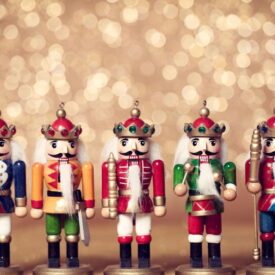
Day – 11 The History of Christmas Nutcrackers
“But when the fulness of the time was come, God sent forth his Son, made of a woman, made under the law, To redeem them that were under the law, that we might receive the adoption of sons.” Galatians 4:4-5
Figures of Nutcrackers are quite a common Christmas decoration now. However, they only became popular after World War II.
Nutcracker dolls have been made in made in parts of what is now Germany and Czechia/Czech Republic since the late 1600s.
One story says that a rich but grumpy farmer couldn’t find a good way of cracking walnuts. He offered a reward to anyone who did. A wood carver from the village of Seiffen (in Saxony) made a doll. It had an opening and closing mouth which was powerful enough to crack nuts. It was a great success and the farmer rewarded the village!
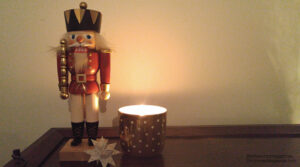
Today Nutcracker dolls are normally made like toy soldiers They were also made decorated like miners, the police and kings.
By 1800 they were popular decorations in the areas of Saxony and Sonneberg. There are records of them being sold in Dresden market in 1786. Napoleon occupied this area in the early 1800s and it might have been Nutcrackers made to look like Napoleon and his soldiers which gave them the look we still have today.
Nutcracker dolls became popular around other parts of Germany and Europe from the early to mid 1800s. Today we also connect Nutcrackers to the famous ballet, The Nutcracker Ballet.
And if you’re like me and have a daughter who’s birthday is shortly after Christmas, you start a tradition of buying her a nutcracker each birthday. She is turning 18 this January and is so excited to see which one I’ll get her (no pressure, right?). We will leave the tree up and make her party come alive with nutcrackers. They are so much fun!
“And…they saw the young child with Mary his mother, and fell down, and worshipped him: and when they had opened their treasures, they presented unto him gifts; gold, and frankincense and myrrh.” Matthew 2:11